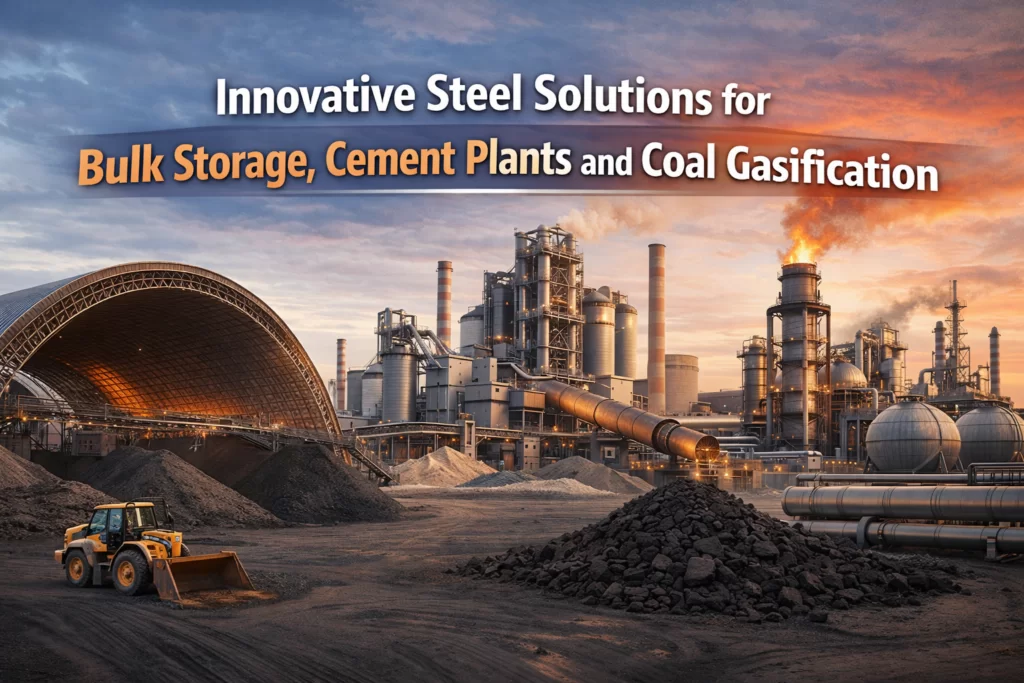
Steel Frame Structure for Bulk Material & Industrial Steel Structures
Steel frame structures for bulk material handling and storage are widely implemented in industrial infrastructure due to their structural efficiency, load-bearing capacity, and adaptability to large-span requirements. Industries such as cement, mining, power generation, agriculture, and manufacturing depend on engineered steel structures buildings and metal structures for safe and efficient storage of bulk materials including coal, clinker, fly ash, limestone, grain, and fertilizers.
A properly designed steel frame structure ensures structural stability under static and dynamic loads, accommodates material handling systems, and provides long-term durability under demanding environmental conditions.
Steel Frame Structure for Bulk Material
A steel frame structure for bulk material is an engineered structural system fabricated from structural steel sections and designed to support storage loads, equipment loads, wind forces, seismic effects, and operational vibrations.
These structures are typically composed of prefabricated steel members such as:
- Primary columns
- Beams and rafters
- Trusses
- Bracing systems
- Purlins and girts
The system is connected through bolted or welded joints and anchored to reinforced concrete foundations. Unlike conventional reinforced concrete buildings, steel structures provide higher strength-to-weight ratio, reduced construction time, and improved flexibility in structural layout.
Bulk material structures often require large clear spans to accommodate conveyor systems, stackers, reclaimers, hoppers, and vehicle movement. Steel framing systems efficiently address these spatial and functional requirements.
Types of Steel Frame Structures for Bulk Material
Steel frame systems for bulk material storage and processing are categorized based on structural configuration and functional requirements.
- Portal Frame Steel Structures
Portal frame systems consist of rigidly connected columns and rafters forming moment-resisting frames. These are commonly used for bulk storage sheds and industrial warehouses.
Portal frame steel structures are suitable for moderate to large spans and are designed to resist vertical loads, wind pressure, and seismic forces. They are widely used in cement storage facilities, fertilizer warehouses, and industrial raw material sheds.
- Truss-Based Steel Structures
Steel truss systems are used where longer spans and optimized material usage are required. Trusses distribute loads efficiently through triangulated members, reducing bending moments and overall steel consumption.
These systems are commonly used in covered stockyards, coal storage facilities, and mining operations. Truss-based steel structures provide structural efficiency while maintaining adequate headroom for bulk material stacking and handling equipment.
- Space Frame Metal Structures
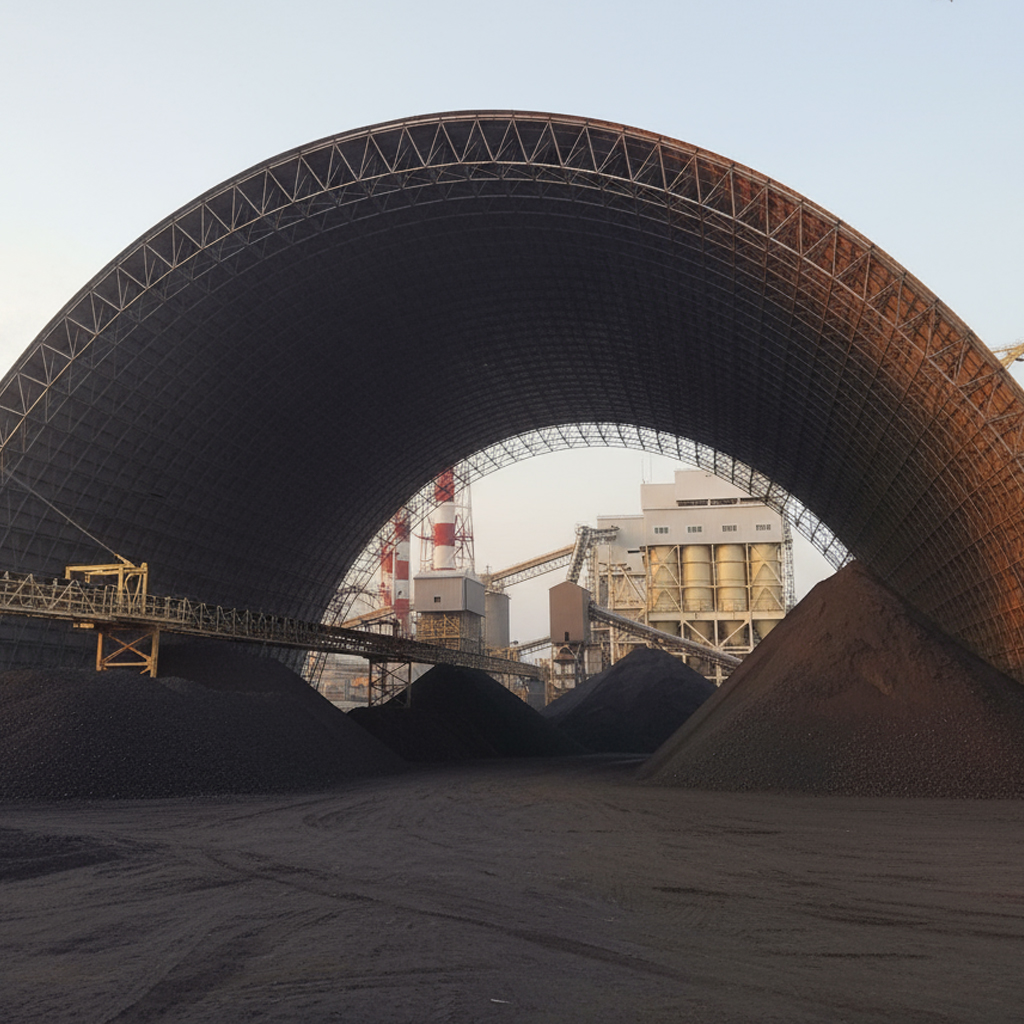
Space frame structures consist of three-dimensional interconnected steel members forming a rigid structural grid. This configuration allows uniform load distribution and high stiffness.
Space frame metal structures are typically used for large-span dome storage systems, industrial buildings, and bulk material enclosures where column-free space is essential. These systems are suitable for projects requiring architectural uniformity and structural redundancy.
- Heavy Structural Steel Platforms
In bulk material processing plants, multi-level structural steel platforms are used to support equipment such as crushers, silos, conveyors, and screening systems.
These steel structures buildings are designed to withstand dynamic loads, vibration effects, and concentrated equipment loads. Structural analysis includes fatigue assessment and vibration control to ensure operational safety.
Structural Components of Steel Structures
A steel frame structure for bulk material typically includes the following primary components:
- Structural Columns
Vertical load-bearing members that transfer roof and operational loads to the foundation.
- Primary Beams and Rafters
Horizontal and inclined members supporting roof systems and transferring loads to columns.
- Bracing Systems
Diagonal members designed to resist lateral loads caused by wind and seismic activity.
- Secondary Members
Purlins and girts that support cladding systems and distribute loads to primary framing.
- Cladding and Roofing Systems
Metal sheets or insulated panels that provide environmental protection and material containment.
- Base Plates and Anchor Bolts
Elements connecting the steel frame to the concrete foundation, ensuring stability and load transfer.
Each component is designed based on applicable load combinations and structural analysis in accordance with relevant codes and standards.
Advantages of Steel Structures for Bulk Material
High Structural Strength
Steel provides high tensile and compressive strength, enabling efficient structural performance with reduced cross-sectional dimensions.
Rapid Construction
Prefabricated steel members are manufactured under controlled conditions, ensuring dimensional accuracy and quality control. On-site erection is significantly faster compared to conventional construction methods.
Large Clear Span Capability
Steel frame systems allow uninterrupted interior space, facilitating efficient bulk material handling and storage operations.
Durability and Corrosion Protection
Protective coatings such as galvanization, epoxy painting, and weather-resistant finishes enhance resistance to corrosion in industrial environments.
Expandability and Modification
Steel structures can be extended or modified with minimal disruption to existing operations. Additional bays or structural reinforcements can be integrated efficiently.
Applications of Steel Frame Structures for Bulk Material
Steel frame structures are extensively implemented in industries requiring high-capacity bulk material storage, handling, and processing infrastructure. Their ability to support heavy static loads, dynamic equipment loads, and large clear spans makes them suitable for the following sectors:
Cement Industry
Steel structures are used for clinker storage sheds, limestone storage yards, raw material handling buildings, and conveyor support systems. These structures are designed to withstand dust exposure, vibration from processing equipment, and continuous operational loads.
Mining Industry
Ore storage facilities, crusher structures, screening units, and conveyor galleries are typically constructed using structural steel systems. These environments require high load-bearing capacity and resistance to abrasive and corrosive conditions.
Power Plants (Including Captive Thermal Power Plants)
In thermal and captive power plants, steel frame structures are used for coal handling plants (CHP), covered coal storage sheds, ash handling structures, and conveyor support systems. These structures must accommodate heavy material loads, wind forces, and continuous operational movement of bulk fuel materials.
Steel Plants
Integrated and mini steel plants require extensive steel structures for raw material storage (iron ore, coal, limestone), sinter plant buildings, blast furnace support structures, conveyor bridges, and stockyard covers. These structures are engineered to resist high-temperature environments, heavy equipment loads, and dynamic operational forces.
Aluminium Plants
In aluminium production facilities, steel frame structures are used for bauxite storage, alumina handling buildings, calcination units, and conveyor systems. Structural systems are designed to withstand corrosive exposure and support large-span industrial layouts.
Agricultural Sector
Grain storage warehouses, fertilizer storage buildings, and bulk commodity sheds utilize steel framing systems to ensure structural reliability and environmental protection.
Chemical and Manufacturing Plants
Steel structures support raw material storage, processing equipment platforms, and material transfer systems. Design considerations include corrosion resistance, vibration control, and fire safety compliance.
Design Considerations
The design of steel frame structures for bulk material requires detailed evaluation of:
- Dead loads and live loads
- Wind loads and seismic forces
- Impact and surcharge loads from stored materials
- Dynamic loads from equipment
- Corrosion exposure conditions
- Fire protection requirements
- Drainage and ventilation
Structural analysis is typically performed using advanced modeling software to ensure safety, serviceability, and compliance with relevant design codes.
Steel frame structures for bulk material storage and handling provide a technically efficient solution for industrial infrastructure. Their structural strength, adaptability to large spans, reduced construction timelines, and long-term durability make them suitable for demanding operational environments.
As industrial facilities continue to require scalable and performance-oriented infrastructure, steel structures and metal structures buildings remain a preferred structural system for bulk material applications due to their engineering reliability and operational efficiency.