
In modern architecture and industrial construction, building facades have evolved much beyond simple external walls. Today, facade systems play a critical role in fire safety, thermal insulation, building performance, energy efficiency, durability, and architectural expression. Among the most advanced facade solutions used globally and in India, Suspended Facade Systems have gained significant importance.
Suspended facade systems are widely adopted in commercial buildings, industrial plants, high-rise structures, and institutional projects due to their engineered performance, and compatibility with modern steel and RCC structures.
What Is a Suspended Facade System?
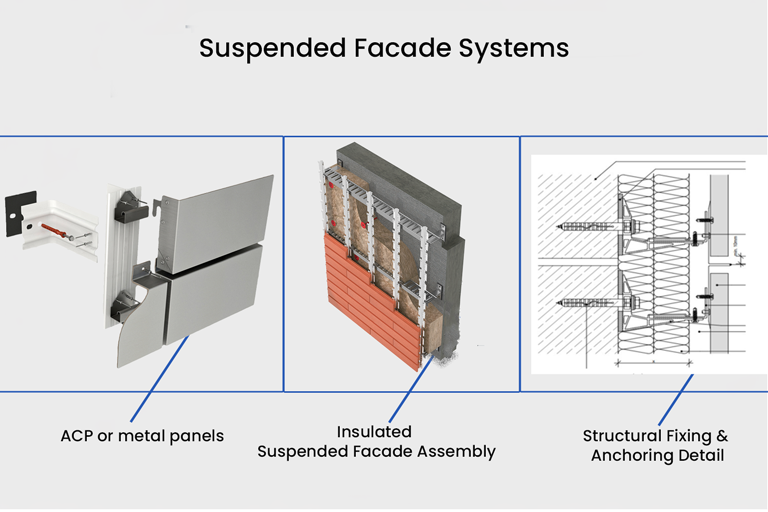
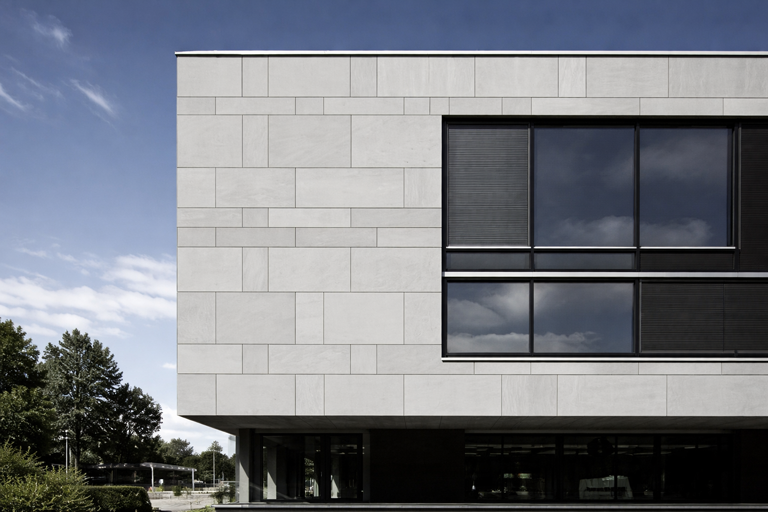
A suspended facade system is a non-load-bearing external cladding system in which facade panels are mechanically fixed or hung from the primary structural framework of a building using brackets, anchors, rails, or support assemblies. Unlike conventional masonry walls, these systems do not contribute to the building’s structural load-bearing capacity.
The facade system transfers dead load, wind load, and seismic forces back to the main structure in a controlled and engineered manner. This allows the building envelope to remain lightweight while achieving high levels of performance in terms of fire resistance, thermal insulation, weather protection, and acoustic control.
Key Benefits of Suspended Facade Systems
Suspended facade systems offer multiple performance and construction advantages over conventional facade methods.
1. Design Flexibility and Architectural Freedom
These systems allow architects to achieve complex geometries, clean elevations, modular layouts, and contemporary aesthetics, using a wide variety of materials and finishes.
2.Thermal Insulation and Energy Efficiency
Suspended facades support the integration of rock wool, glass wool, PIR, or mineral insulation, improving thermal resistance and reducing heat gain—especially critical in Indian climatic conditions.
3. Fire Safety Performance
Modern suspended facade systems have sufficient air gap and are designed to incorporate:
- Fire-retardant or non-combustible cladding materials
- Fire stops and cavity barriers
- Insulation materials with high fire ratings
This helps meet NBC (National Building Code of India) and local fire authority requirements.
5.Faster Construction and Installation
Prefabricated panels and dry installation methods significantly reduce construction time, making suspended facades ideal for fast-track industrial and commercial projects.
6.Ease of Maintenance and Replacement
Individual panels can be replaced or serviced without dismantling the entire facade, reducing long-term maintenance costs.
Types of Suspended Facade Systems
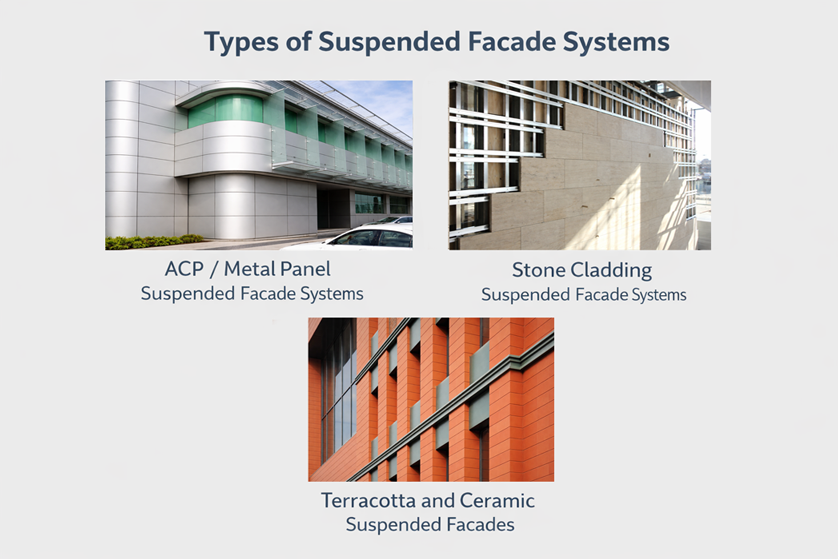
Suspended facade systems are classified based on the cladding material, fixing methodology, and functional requirements. The most commonly used systems in India are described below.
- ACP / Metal Panel Suspended Facade Systems
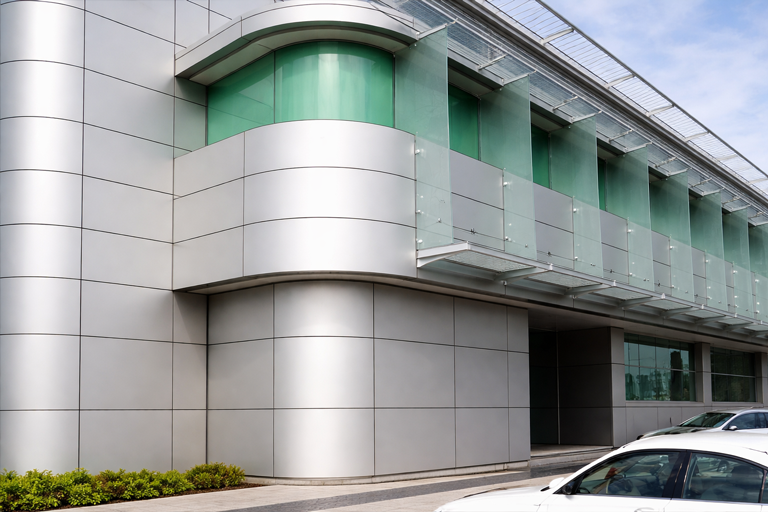
ACP / Metal Panel suspended facade systems are among the most widely used facade solutions in India. These systems utilize Aluminum Composite Panels (ACP), aluminum sheets, galvanized steel panels, or pre-coated metal panels, fixed over a secondary support framework.
This facade type is preferred for commercial buildings, industrial buildings, warehouses, manufacturing plants, and infrastructure projects due to its cost efficiency, durability, and ease of installation.
Fire-retardant (FR) grade ACP panels and non-combustible metal panels are increasingly specified to comply with Indian fire safety regulations, especially for high-rise and public buildings. These systems also allow integration of thermal insulation and fire barriers behind the panels.
- Stone Cladding Suspended Facade Systems
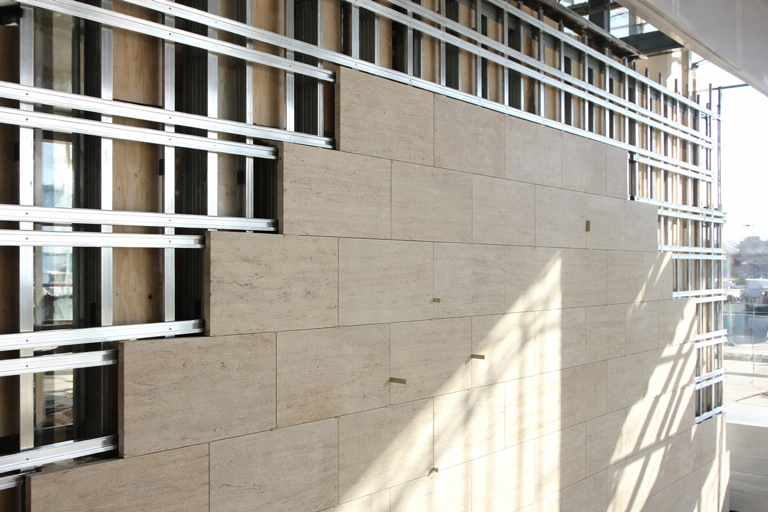
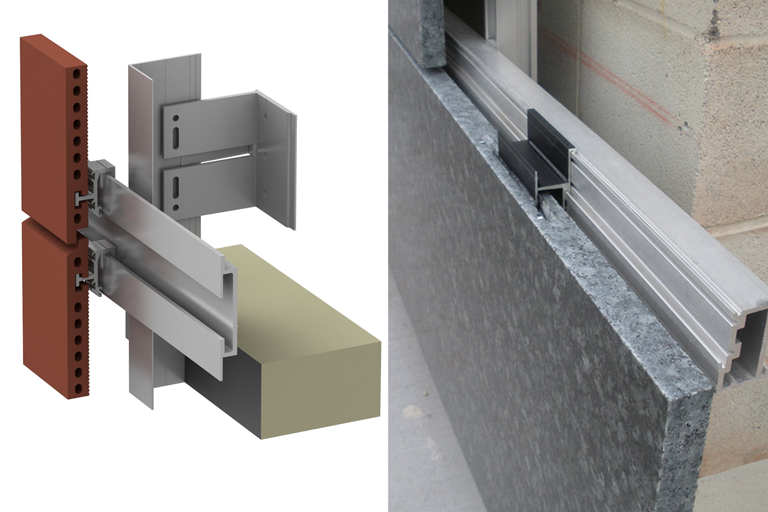
Stone cladding suspended facade systems use natural stone panels such as granite, marble, limestone, or sandstone, mechanically fixed using anchors, kerf systems, and support rails.
Due to the self-weight of stone, these systems require precise engineering to ensure safe load transfer, wind resistance, and long-term stability. Stone facades are commonly used in public buildings, premium commercial buildings, hotels, institutional buildings, and residential projects, where durability and architectural prestige are required.
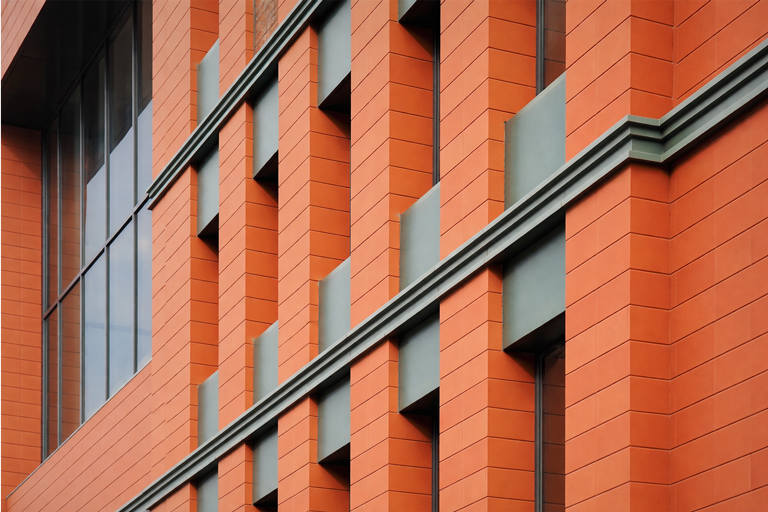
- Terracotta and Ceramic Suspended Facade Systems
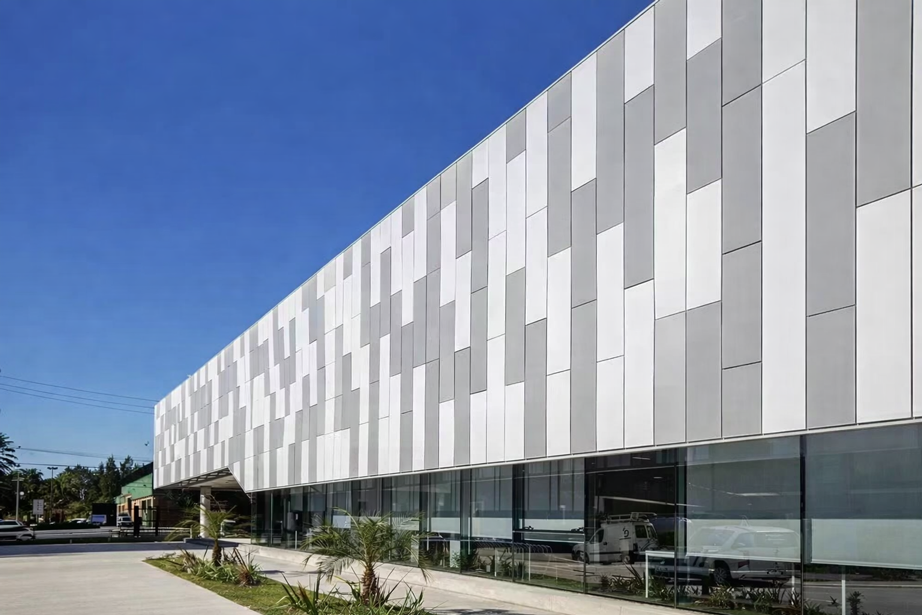
Terracotta and ceramic facade systems consist of factory-manufactured clay-based panels mounted on aluminum rail systems. These systems are designed as ventilated facades, allowing airflow between the cladding and the building envelope.
They are increasingly used in green buildings, educational institutions, and residential projects, particularly where sustainability, fire resistance, and thermal performance are important design considerations.











Airports
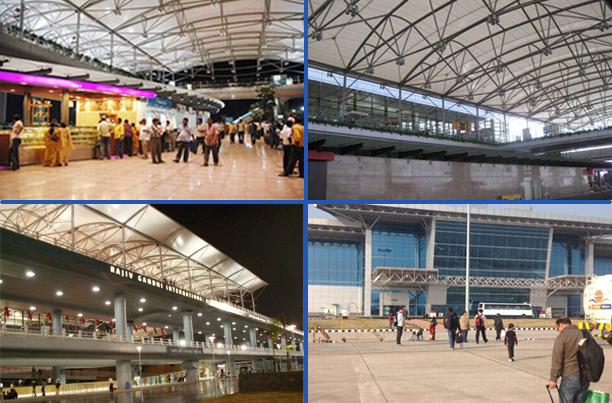
The integrated terminal buildings are designed with number of structural innovations. The key feature of airport structure is their long span roof covering with massive column spacing. The mega columns and large cantilevers make the structure unique. By using modular space frame structure supported by cantilevered columns makes the roof aesthetically good with doubly curved.
Learn More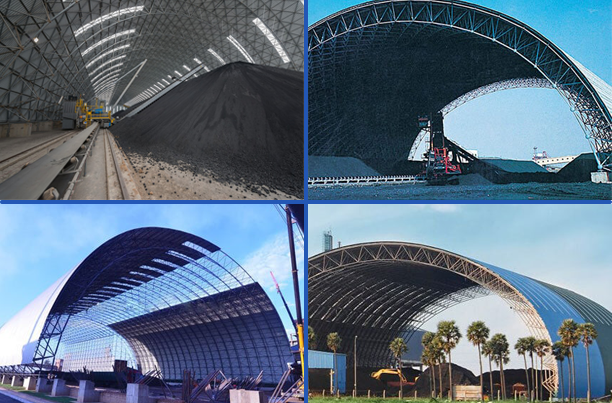
Bulk Storage Sheds
Bulk storage sheds are large span structure to accommodate tons of coals for continuous supply to the boilers.The structures are designed with modular space frame to make it cost effective compared to other conventional structures. Catwalks, ducts and other services can be accommodated within the top and bottom chords.
Coal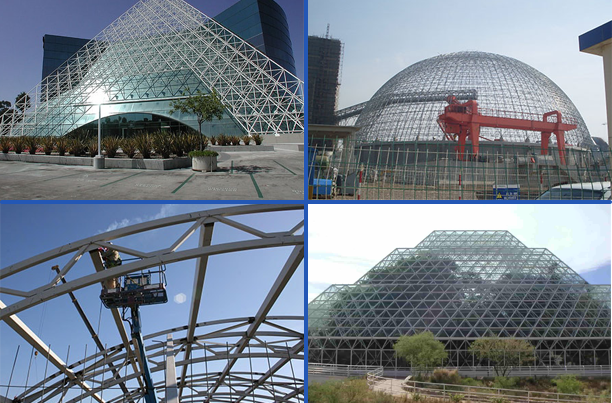
Space Frames
A space frame is a three-dimensional structure. The 3D behavior ensures optimum utilization of material. The quality of roofing is exceptionally good, as the deflections are almost negligible. Despite their light weight, these structures are designed to carry much heavier loads and have a huge spanning capacity. Erection time is minimal as the material is pre-fabricated from the factory.
Learn More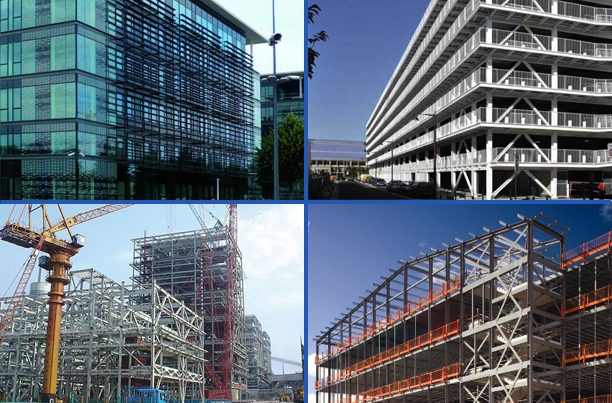
Multi-Storey Buildings
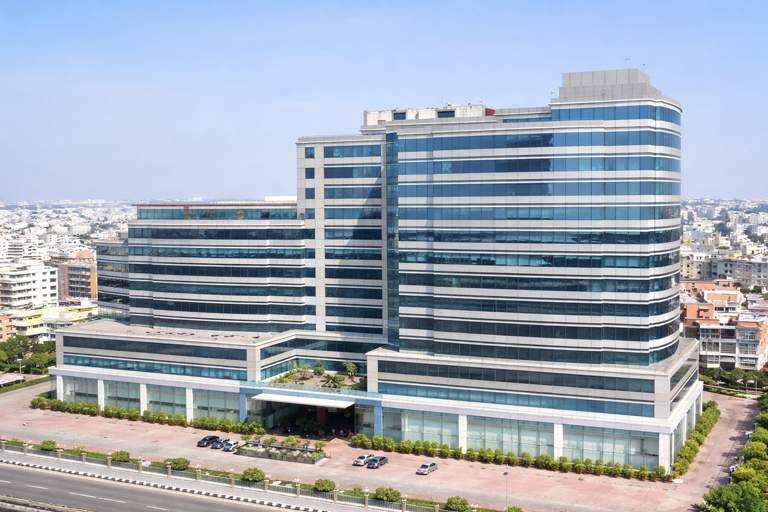
Steel frames construction is a very popular structural form for multi storey buildings as it provides great flexibility. The structure has adequate strength and stiffness to resist the applied loads due to gravity and wind. The function of the structure in resisting vertical loads due to gravity and horizontal loads due to wind is generally considered separately.
Learn More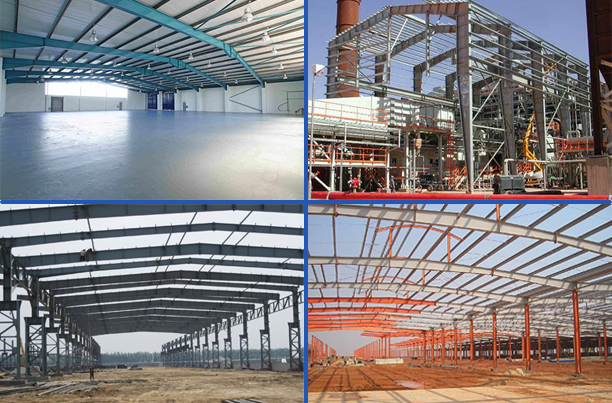
Pre-Engineered Buildings
It offers a futuristic solution for creating durable and efficient structures in a cost-effective manner. Apart from great flexibility of designing and minimal construction time offered by PEB’s, they are also preferred for their robustness and durability. Moreover, it is possible to add a wide range of structural and non-structural components, which enhances their aesthetic appeal and also improves their usability.
Learn More
Membrane Structures
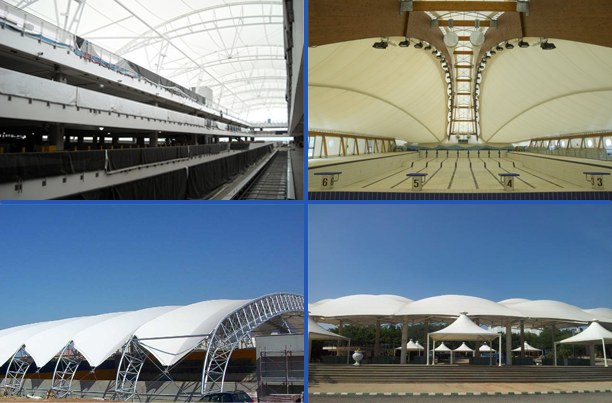
Textile supported by steel combines the high flexibility of use of this one, from reticular arches to infinite space geometries, with a singular covering applied only under optimum conditions in order to avoid abrasion and corrosion due to contact with the main bearing structure. The all-season use is guaranteed by a singular system of side opening in order to obtain maximum ventilation in the hot season.
Learn More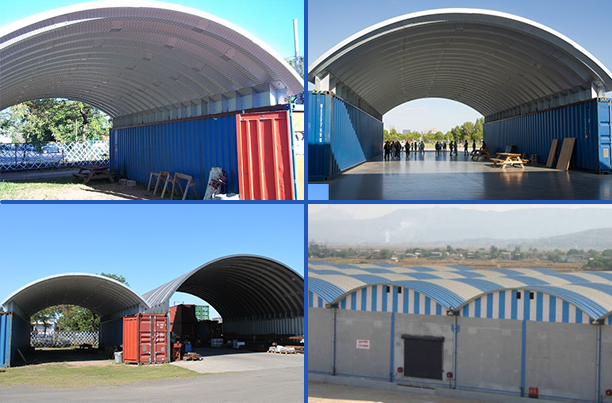
Self Supporting Roofs
A self-supporting roofing system makes it possible to erect a warehouse in one span without trusses, purlins, and rafters. The systems are mechanically sealed, which ensures better weather proofing and a hygienic and clean environment. The absence of holes, nuts, bolts, overlaps, or sealants, these structures require minimal to zero maintenance, making them highly cost-efficient.
Learn More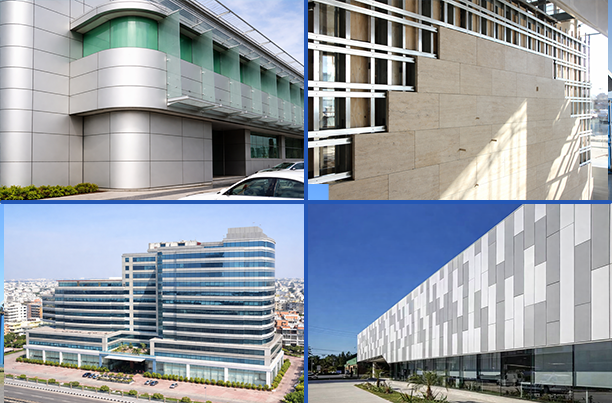
Suspended Facade Systems
In modern architecture and industrial construction, building facades have evolved much beyond simple external walls. Today, facade systems play a critical role in fire safety, thermal insulation, building performance, energy efficiency, durability, and architectural expression. Among the most advanced facade solutions used globally and in India, Suspended Facade Systems have gained significant importance.
Learn More